
$0.00


HOW TO BUILD A SIMPLE OUTDOOR CEMENT FISH POND ANYONE CAN MAKE (Affordable – Durable – Easy to Maintain)
– The trend of designing outdoor garden fish ponds has been growing strongly in recent years. Not only do they enhance the beauty of a home, but fish ponds also create a relaxing space, help balance feng shui, and increase the overall value of the property.
– However, to build a durable and beautiful outdoor cement fish pond where fish stay healthy and the water remains clear for a long time, it is important to follow the proper construction techniques from the beginning.
– This article will provide a detailed guide on how to build a cement fish pond properly, helping you save costs and minimize common mistakes.
1. Why Should You Build an Outdoor Cement Fish Pond?
– When researching outdoor fish pond construction, many people hesitate between liner ponds, pre-made ponds, and cement ponds. Among these options, outdoor cement fish ponds are still considered the best choice for long-term durability and aesthetics.
Advantages of an Outdoor Cement Fish Pond
✔ High durability, lasting 10–20 years if built with proper techniques
✔ Flexible design that can fit different garden or yard sizes
✔ Suitable for koi fish, goldfish, and other outdoor ornamental fish
✔ Enhances the visual appeal and feng shui value of the home
Disadvantages to Consider
✘ Construction time is longer than liner ponds
✘ Requires careful waterproofing treatment
✘ Needs a proper filtration system investment
– If you plan to raise fish long-term and want a stable, durable structure, a cement fish pond remains the most optimal solution.
2. Estimating the Cost of Designing an Outdoor Cement Fish Pond – An Important Step You Should Not Skip
– When learning how to build an outdoor cement fish pond properly, many people focus only on creating a beautiful design and forget one very important step: budget planning.
– In reality, if you do not calculate the budget from the beginning, you may easily face situations such as:
- The project being left unfinished due to unexpected extra costs
- Having to cut down the filtration system to reduce expenses
- Or rebuilding parts of the pond because the design is not suitable
– A beautiful fish pond is not only about appearance; it also needs to fit the family’s investment budget to ensure the project is completed properly and can operate effectively in the long term.

Design Cost Estimation
– Besides the cost of materials and the filtration system, homeowners should also consider several other expenses when building an outdoor cement fish pond.
– Specifically, these may include:
- Labor costs (masons, plumbing technicians, electricians, and filtration system installers)
- Material transportation costs (sand, gravel, cement, filtration equipment)
- Design drawing costs if hiring a professional design service
- Site preparation or supervision costs
– These are expenses that many people often overlook during the initial planning stage.
-> Therefore, when planning how to build a cement pond for ornamental fish, budget estimation should always be the top priority.
– A clear financial plan will help you:
- Control costs more effectively
- Avoid spending beyond your investment capacity
- Ensure the construction process stays on schedule
- Prevent cutting important components such as the filtration system
– In reality, many fish ponds encounter problems after only a few months of use simply because homeowners tried to save money initially by reducing essential components.
– Professional advice:
- Set aside an additional 10–20% of the budget for unexpected expenses.
- Prioritize the pond structure and filtration system, while decorative elements can be added later.
- Prepare a detailed cost estimate for each construction item before starting the project.
– Throughout the entire process of building an outdoor cement fish pond, cost planning is the foundation that determines the success and long-term durability of the project.
3. Things to Consider When Building an Outdoor Cement Fish Pond
– To build an outdoor cement fish pond that is durable and well-designed, homeowners need to pay attention to the pond size, design, and technical factors right from the beginning.
3.1. Pond Size and Water Capacity
– Typically:
- The common outdoor pond area ranges from 15–20 m²
- The ideal depth is about 1.2–1.5 meters
- The minimum water capacity should be around 1 m³ of water for each large ornamental fish
– Determining the pond size from the beginning is very important because it directly affects the filtration system, number of fish, and overall investment cost.
– In addition, homeowners should:
- Balance the number of fish in the pond to avoid overcrowding and oxygen shortages
- Install a roof or shade structure if the area frequently reaches 38–40°C
- Ensure the pond does not receive direct sunlight all day
3.2. Technical Design
– During construction, it is recommended to:
- Add a layer of coarse yellow sand under the cement base to reduce impact for the fish and support natural water filtration
- Design the pond bottom with a slight slope toward one side
- Install a drain valve (around 50 cm) to make water changes and cleaning easier
– A technically correct design helps the pond operate more stably over time and reduces future repair issues.
3.3. Waterproofing and Aesthetics
– After completing the pond, it is recommended to:
- Apply a black waterproof coating to the bottom of the pond
- This helps the fish stand out more clearly when viewed
- It also reduces algae buildup and keeps the pond cleaner for longer
– Besides technical aspects, decorating the surrounding landscape is also very important to enhance the overall aesthetics and value of the garden space.
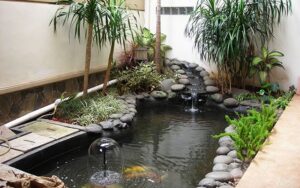
KOI FISH POND DESIGN
– In summary, building an outdoor cement fish pond properly is not just about pouring concrete and adding fish. It also requires careful planning of the pond size, design, drainage system, and waterproofing right from the beginning.
4. Determining the Layout of a Mini Outdoor Fish Pond – A Key Factor for Positive Feng Shui
– In modern outdoor cement fish pond construction, the location of the pond is extremely important. It not only affects the aesthetics and functionality of the space but is also believed to influence the feng shui and fortune of the family.
4.1. Choosing a Location Suitable for Space and Feng Shui
– When determining the layout of a mini outdoor fish pond, homeowners should consider the following:
- Do not place the pond too low compared to the house foundation
- Avoid placing it in the middle of the main walkway, which may disrupt daily activities
- Prioritize open areas at the side or corner of the garden
- Avoid locations with direct sunlight all day
– From a feng shui perspective, many families choose the pond location based on the age and elemental destiny of family members with the hope of:
✔ Increasing positive energy
✔ Attracting wealth and prosperity
✔ Bringing luck and stability
– In feng shui, water symbolizes wealth, so arranging a fish pond properly can help balance the energy of the entire living space.
4.2. Should You Build a Fish Pond in Front of the House?
– Some people believe that building a fish pond in front of the house is not good and may bring bad luck. However, this can be adjusted by designing the pond shape and direction to match the homeowner’s feng shui element.
– If designed properly:
- The pond shape should be soft and natural, avoiding sharp corners
- The direction of the pond should match the homeowner’s element
- The pond should not block the entire front view of the house
– The safest and most stable location is often behind the house or at the side of the garden, which helps reduce feng shui risks and create a more harmonious energy flow.
4.3. Determining the Direction of the Fish Pond
– Besides the layout, the direction of the pond also plays an important role. Many families believe that choosing a feng shui–friendly direction can help increase wealth, luck, and positive energy for the home.
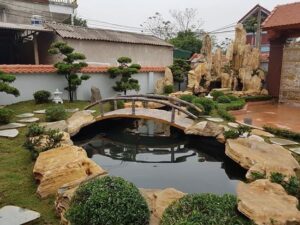
Affordable Outdoor Fish Pond Design Ideas
4.4. Preparing the Ground Before Construction
– After determining the appropriate location, homeowners should clean and prepare the ground following these steps:
Step 1: Clear away leaves, stones, gravel, sand, and debris from the construction area.
Step 2: Dig the ground to the appropriate depth according to the pond design.
Step 3: Sanitize and treat the construction area to prevent mold and harmful bacteria that could affect the fish later.
– Proper preparation from the beginning will help the construction process run smoothly, ensuring the fish pond operates stably, remains durable, and provides a safe ecosystem for the fish inside.
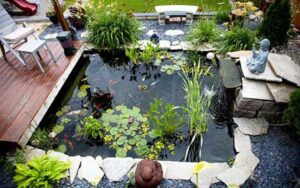
Building a Cement Koi Fish Pond in Your Garden
5. Building an Outdoor Cement Fish Pond
– After determining the location and preparing the ground, you can begin construction. To ensure the pond is durable, attractive, and operates stably for a long time, preparing the right materials is extremely important.
5.1. Preparing Materials for Building an Outdoor Cement Fish Pond
– Below are the essential materials needed when constructing an outdoor cement fish pond.
5.1.1. M75 Construction Bricks (B5 Strength)
– This type of brick is produced from stone powder, sand, and cement, with quality comparable to concrete aggregate bricks.
Key advantages:
-
Lightweight
-
About 40% porosity
-
Good sound and heat insulation
-
Stable load-bearing capacity
-
Less likely to crack when the weather changes
– This type of brick helps increase structural durability while reducing construction costs.
5.1.2. Basic Construction Materials
-
Yellow sand
-
High-quality cement
-
Clay and compacted soil for the pond base
– These materials determine the strength and load-bearing capacity of the pond structure.
5.1.3. Waterproofing Materials
-
Specialized waterproof paint or additives
-
Black plastic liner for the base
– Proper waterproofing helps prevent water leakage and reduce cracking over time.
5.1.4. Water System and Decorative Materials
-
Water pipes and bottom drain valve
-
Water pump
-
Filtration system
-
Protective mesh
-
Decorative rocks, mini landscapes, and plants around the pond
– These elements help the pond operate efficiently, keep the water clean, and enhance the beauty of the garden space.
– Preparing all materials in advance will help the construction process go smoothly, minimize additional costs, and ensure the pond lasts 10–20 years.
5.2. Construction Process for an Outdoor Cement Fish Pond
– After preparing all the materials, follow this proper construction process to ensure the pond is durable, waterproof, and suitable for healthy fish growth.
Step 1: Shape the Ground and Dig the Pond
Based on the initial design drawing, determine:
– Based on the initial design drawing, determine:
-
Pond area
-
Depth (usually 1.2 – 1.5 m for outdoor ponds)
-
Shape (square, rectangular, curved, etc.)
– Then proceed to:
-
Use tools such as shovels and hoes to dig according to the required dimensions
-
Level the pond bottom and compact the soil firmly
-
Create a slight slope at the bottom to make water drainage easier later
– Note: The more compact the soil foundation is, the less risk of sinking or cracking in the future.
Step 2: Install the Plumbing System
After shaping the pond base, install the following systems:
-
Water supply pipes
-
Bottom drainage pipe
-
Pipe connection to the filtration system
Installing these from the beginning helps:
✔ Avoid breaking or modifying the pond later
✔ Make water changes and cleaning easier
✔ Reduce the risk of structural damage
– This is a step many people overlook but is extremely important in building a proper outdoor cement fish pond.
Step 3: Apply the Waterproofing Layer
– Waterproofing determines the lifespan of the pond.
– Proper technique:
-
Mix high-quality cement with waterproof additives
-
Apply the first waterproof mortar layer over the entire surface
-
Wait about 1 hour for it to partially dry
-
Apply the second waterproof mortar layer
-> You can also place black plastic lining underneath to increase waterproof effectiveness.
– If done carefully, the pond can last 10–20 years without leaking.
Step 4: Brick Construction and Finishing
– It is recommended to use M75 bricks because they:
-
Have high durability
-
Are easy to shape for curved designs
-
Are less prone to cracking outdoors
– Construction process:
-
Build pond walls about 10 cm thick
-
Apply mortar evenly with strong brick joints
-
Let it dry for 2–3 days
-
Apply a surface plaster layer
-
Install reinforcement mesh to prevent cracks
-
Add a second plaster layer mixed with waterproof additives
– After completion, you should fill the pond with water and test it for 5–7 days to check for leaks before releasing fish.
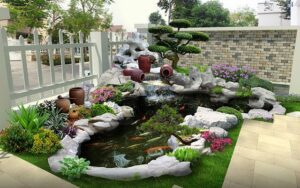
Outdoor Fish Pond Design Ideas
– By following the above process correctly, you will have a durable, aesthetically pleasing outdoor cement fish pond that operates stably for a long time.
5.3. Decorating an Outdoor Cement Fish Pond – Beautiful, Elegant, and Stylish
– After completing the structural construction, decoration becomes the “soul” of the pond, determining whether your fish pond looks attractive and impressive.
– A beautiful outdoor cement fish pond is not only for raising fish but also serves as a highlight for the entire garden landscape.
5.3.1. Arranging Mini Landscapes Around the Pond
– Mini landscapes help the space look softer and more natural. You can:
-
Plant green trees around the pond to create shade
-
Cover the ground with white gravel or pebbles
-
Add a mini waterfall to enhance vitality and movement
– Some aquatic plants that are easy to grow and maintain in the pond include:
-
Green waterweed (La Hán algae)
-
Tiger grass
-
Hornwort
-
Aquatic moss
– Aquatic plants not only make the pond more visually appealing, but also help naturally filter the water and create a stable environment for fish to grow.
5.3.2. Arranging Decorative Rocks for Better Aesthetics
– Decorative stones make the pond look more natural and luxurious.
– You can:
-
Arrange stones around the pond edge
-
Create different rock heights to add depth
-
Design a mini rock garden (non bộ) if you like the traditional Asian garden style
– Depending on your preference, you can choose modern, minimalist, or traditional feng shui garden styles.
5.4. Notes When Decorating an Outdoor Fish Pond
✔ Do not place too many decorations that make the pond crowded
✔ Avoid sharp stones that may injure the fish
✔ Prioritize natural materials to maintain a harmonious garden atmosphere
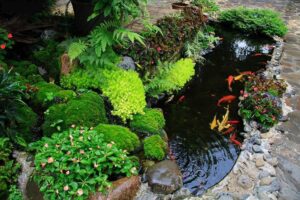
Trending Outdoor Fish Pond Designs for 2026
– Proper decoration will ensure that building an outdoor cement fish pond is not only for raising fish, but also becomes a relaxing space that enhances the aesthetic value of the home.
6. What Fish Should You Raise in a Mini Outdoor Fish Pond for Beauty and Easy Care?
– To make an outdoor cement fish pond both beautiful and low-risk, you should divide the pond ecosystem into three water layers and choose suitable fish for each layer:
6.1. Surface Layer
– Choose fish that are easy to keep and adaptable, such as:
-
-
Koi fish (beautiful, luxurious, and good for feng shui)
-
Molly fish (easy to raise and reproduce quickly)
-
6.2. Middle Layer
– This layer is suitable for stronger and slightly larger fish, such as:
-
- Flowerhorn fish (Diamond Flowerhorn)
-
Pearl fish
6.3. Bottom Layer
– Choose omnivorous fish that help clean the pond, such as:
-
- Plankton-eating fish
- Bottom-cleaning fish
Note: Avoid overcrowding the pond. On average, 1 m³ of water for one large fish is a reasonable ratio to help fish grow well.
– When applied properly in the process of building an outdoor cement fish pond, you will not only have a beautiful pond but also create a balanced ecosystem where fish stay healthy, the water remains clear, and maintenance becomes easier.
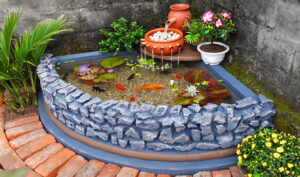
Minimalist Outdoor Fish Pond Design with a Strong Visual Impact
7. How to Properly Maintain and Care for an Outdoor Cement Fish Pond
– Building a beautiful pond is only the first step. To keep fish healthy, water clear, and the pond durable, regular maintenance is necessary.
7.1. Removing Algae on the Pond Walls
– After some time, green algae may appear on the pond walls.
✔ Use specialized algae removal products (available at aquarium stores)
✔ Add algae-eating fish to help control algae growth
✔ Avoid overusing chemicals, as excessive amounts can shock the fish
7.2. Cleaning and Changing Water Regularly
-
- Change the water once every 3 weeks (do not replace 100%; only 30–50% of the water)
- Siphon debris from the pond bottom and remove leftover food
-
Use biological treatments or probiotics to stabilize the water environment
– Regular cleaning helps prevent bacteria and fungal diseases from developing in the pond.
7.3. Protecting the Pond During Bad Weather
✔ Rainy season: Use nets or covers to prevent fish from jumping out or being washed away
✔ Hot weather: Install a shade cover or plant trees to create shade
✔ Monitor water temperature during extremely hot days
– A properly planned outdoor cement fish pond construction method will save you a lot of maintenance time later. With proper care, the pond can last 10–20 years while keeping fish healthy and the ecosystem stable.
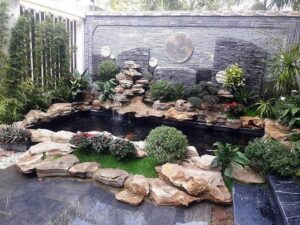
Simple and Unique Outdoor Fish Pond Designs
8. How to Keep Outdoor Cement Fish Pond Water Clear – Less Cloudy – Less Algae
– Keeping an outdoor fish pond crystal clear is actually not difficult. You only need to follow these three key steps:
8.1. Adjust the Feeding Amount
– This is the most common reason why pond water becomes cloudy.
✔ Only feed fish enough food for them to eat within 3–5 minutes
✔ Do not let leftover food sink to the bottom of the pond
✔ Feed small portions but divide into two meals per day if necessary
– Feeding the right amount not only helps keep the water clearer, but also saves fish food costs.
8.2. Change the Water Regularly
-
-
Replace 30–50% of the water every 2–3 weeks
-
Remove debris from the pond bottom during water changes
-
Clean the pond walls if algae appears
-
– Regular water changes help reduce bacteria, algae growth, and mosquito breeding.
8.3. Install a Suitable Filtration System
– The most commonly used systems today include:
✔ Biological filtration (safe and helps stabilize the water environment)
✔ Mechanical filtration combined with biological filtration
– A good filtration system allows continuous water circulation, reduces odors, and keeps the pond clean.
– A beautiful and durable outdoor cement fish pond depends not only on proper construction but also on proper care. When the pond is built with the correct techniques from the beginning, tasks such as water changing, cleaning, and maintaining clear water will become much easier.
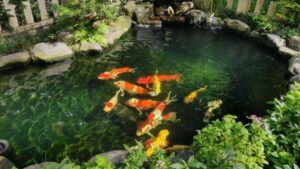
Outdoor Fish Pond Treatment
– Hopefully, through this complete guide, you now clearly understand how to build and effectively care for an outdoor cement fish pond.
HEY GARDEN — Reputation Creates Lasting Value
We understand that every project is not only a financial investment but also a part of a family’s living value. Therefore, every process is designed to ensure complete peace of mind for our customers.
📞 Hotline: 0916.909.535
🌐 Website: Heygarden.vn

HEY GARDEN — A Part of Your Life 🌿