
$0.00


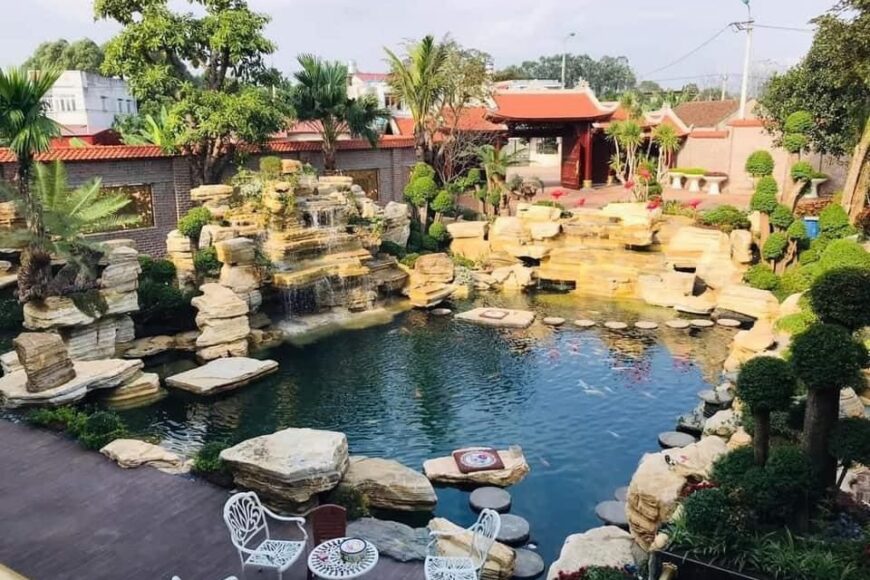
1. Overview of Rock Garden Art
– Rock gardens have long been present in the living spaces of Vietnamese people and many other Asian cultures. Beyond being a refined hobby, they represent a traditional art form deeply rooted in cultural heritage. Over time, rock gardens have become a popular landscape design trend, widely embraced by families in townhouses, villas, cafés, and resorts.
– More than just decorative miniature landscapes, rock gardens also carry profound feng shui significance. When properly designed and arranged, they can help attract positive energy, balance the five elements, and enhance the overall vitality of the homeowner’s space. Therefore, in rock garden construction, aesthetics and feng shui must always be carefully harmonized.
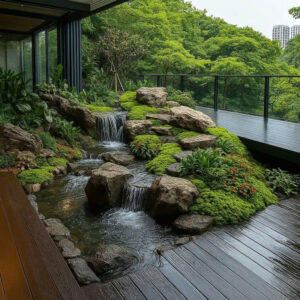
Beautiful Rock Garden Design at Very Low Cost
2. What is a Rock Garden?
– A rock garden (derived from Vietnamese Nom characters) is the art of recreating majestic mountain landscapes and miniature natural scenery within garden spaces. This art form shares similarities with Chinese penjing and Japanese bonkei, but Vietnamese rock gardens have their own distinct identity—simple, rustic, and closely connected to local culture.
– A typical rock garden includes sculpted stones representing mountains, greenery, waterfalls, ponds with fish, and small decorative elements that simulate a natural landscape. Depending on space and personal preference, homeowners can choose either a mini indoor rock garden or a larger outdoor garden installation.
– Today, rock garden art is no longer just for appreciation; it has become a premium highlight in living spaces—offering a place for people to reconnect with peace and nature amidst modern life. 🌿
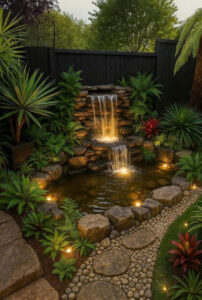
A Unique and Impressive Rock Garden Design
3. History and Origins of Rock Gardens
– The origin of rock gardens has been recorded in various historical documents. According to Đại Việt sử ký, in June of the Year of the Rooster (985 AD) under the reign of Lê Đại Hành, people created an artificial mountain on a floating raft in the river for the king and his court to enjoy during his birthday celebration. This is considered one of the earliest milestones showing the presence of artificial miniature mountain art in Vietnam.
– In addition, some other sources suggest that rock garden art originated in China during the Eastern Han Dynasty (25–220 AD). Ancient murals from this period depict potted plants combined with rocks, forming miniature representations of natural landscapes. From there, the art of miniature landscape design gradually developed and spread across many East Asian countries.
– It can be said that Vietnamese rock garden culture was influenced by ancient Chinese landscape art. However, through cultural adaptation, Vietnamese artisans have developed their own style—simple, harmonious, and closely connected to everyday life. Over hundreds of years, rock gardens have evolved from a refined hobby into a distinctive cultural feature of Vietnamese living spaces.
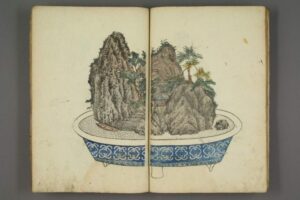
Origin of Rock Gardens
4. The Cultural Art of Rock Gardens in Vietnam
– In Vietnam, rock gardens are artificial mountain formations made from stone combined with water features, recreating miniature natural landscapes. Sizes vary widely: from mini indoor versions of 15–20 cm (usually without fish), to large-scale designs of 2–3 meters or even 8–9 meters in villas, temples, and tourist resorts—often integrated with koi fish, aquatic plants, and countryside-inspired scenery.
– Stone is the most important element, commonly using coral stone, fossil stone, or volcanic rock due to their good water absorption properties. Vietnamese people prefer stones with natural mountain- or island-like shapes. The number of peaks is often kept odd (1, 3, 5) based on feng shui beliefs. Plants are used mainly as accents, helping to create a balanced and lively composition.
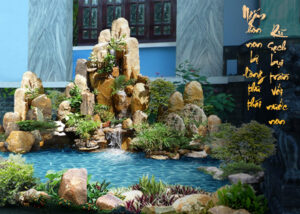
3 Ways Master Craftsmen Create Beautiful Rock Gardens That Leave Clients in Awe
5. Stone – The Soul of Rock Garden Design Art
– In rock garden art, stone is the core element that determines the character and overall beauty of the landscape. Each type of stone has its own unique features, suitable for different design styles. Below are some commonly used stones in garden rockery construction:
-
Coral stone
– The most commonly used type due to its porous, soft structure and good water absorption, making it easy to shape—ideal for waterfall rock garden designs.
-
Snow mountain stone
– Distinguished by unique black-and-white striped patterns, creating a striking and elegant visual effect for miniature landscapes.
-
Elephant skin stone
– With a rough, textured surface resembling elephant skin, it brings a natural and powerful aesthetic. Suitable for both dry and water rock gardens.
-
Limestone
– Often containing impurities, resulting in various colors such as white, ash gray, light green, yellow, dark pink, or black—offering great diversity in design.
-
Cat ear stone
– Characterized by its gray color and varied shapes, it is ideal for mini rock gardens, tabletop landscapes, or waterfall features.
-
Pebbles (river stones)
– Available in many sizes and colors, they are favored by artisans for creating a soft, natural feel in landscape designs.
– Other stones such as cloud-pattern stone, yellow stone, and fossil stone also enrich outdoor rock garden artistry.
-> Choosing the right type of stone is the first step in creating a beautiful, durable, and vibrant rock garden.
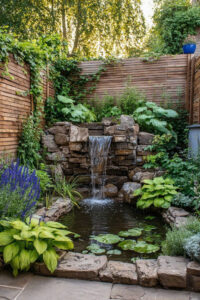
A beautiful garden design must include attractive landscape elements to make the space more lively, interesting, and diverse. Each type of miniature landscape has its own value; however, feng shui rock gardens are especially associated with prosperity and bring benefits related to wealth and fortune.
6. Principles of Garden Rock Garden Layout Design
– A rock garden is not only a decorative focal point but also carries important feng shui significance. Therefore, its design and construction must follow certain principles to ensure aesthetic balance, overall harmony, and positive energy flow for the homeowner.
-
Balanced proportions
– The size of the rock garden must be proportional to the garden area and architectural structure of the house. A rock garden that is too large will feel heavy, while one that is too small will lack visual impact.
-
Stable form and structure
– Mountain formations must follow physical stability rules: slanted rocks should have proper counterbalance and a strong base to support the load. During construction, using a consistent type of stone helps create a natural mountain-like appearance.
-
Principle of grooves and water flow
– When arranging stones, natural vertical gaps and grooves should be created to guide water flow. Random placement should be avoided as it disrupts composition and feng shui energy flow.
-
Choosing durable stone materials
– Priority should be given to long-lasting, hard-textured stones with low erosion to ensure durability and structural stability over time.
-
Selecting suitable plants
– Rock gardens are often combined with greenery and water features to enhance vitality. However, plants must be suitable for rocky environments and properly maintained to ensure long-term growth.
-> Following these principles helps create a rock garden that is both naturally beautiful and brings harmony, feng shui value, and relaxation to the living space.
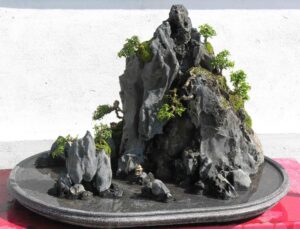
Rock Garden – The Art of Recreating Miniature Natural Landscapes
– The design and construction of rock gardens should always be integrated with the overall landscape design to create continuity, unity, and harmony throughout the garden space. A rock garden can serve as a focal point, but it cannot exist without supporting elements such as pathways, greenery, lawns, and ponds. These features complement one another, enhancing both the aesthetic value and feng shui benefits of the rock garden. Small pathways are believed to guide positive energy into the home, while the rock garden itself acts as a symbolic shield against negative energy, bringing prosperity and good fortune. In conclusion, a rock garden landscape should be a perfect and harmonious combination with the entire garden design.
HEY GARDEN — Trust Builds Long-Term Value
– We understand that every project is not just a financial investment, but also a reflection of a family’s way of life and living values. That is why every step of our process is designed to provide clients with complete peace of mind and absolute confidence.
📢Hotline: 0916.909.535
🌐Website: Heygarden.vn

HEY GARDEN — A Part of Your Life 🌿
