
$0.00


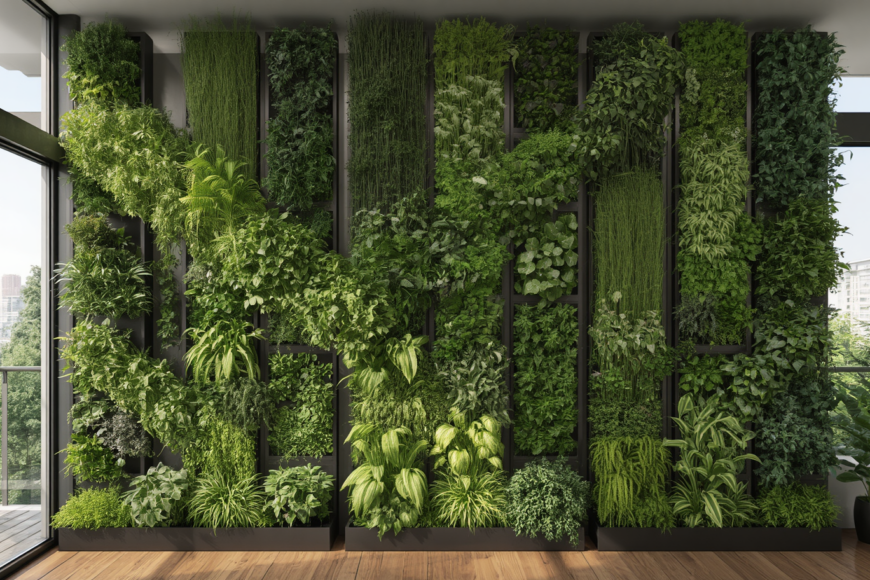
In the context of shrinking land areas and a growing demand for green living, vertical gardens have become a preferred landscaping solution for many families, businesses, and commercial projects. Not only do they efficiently utilize blank wall spaces, but vertical gardens also deliver high aesthetic value, improve air quality, and create a sense of closeness to nature. Thanks to the diversity in styles, materials, and plant species, modern vertical garden designs can be flexibly applied to various spaces—ranging from townhouses and villas to coffee shops, offices, or resorts. Let’s explore the beautiful, modern, and easy-to-install vertical garden models that are currently trending to find the perfect idea for your space.
What is a Vertical Garden?
A vertical garden is a method of arranging greenery vertically on walls, partitions, or specialized framing systems, rather than planting directly in the ground like traditional gardens. This system is typically composed of a supporting structure, growing media (substrates), an irrigation system, and plant species suited for growth on vertical surfaces.
Beyond saving space, vertical gardens offer numerous benefits, including enhancing the aesthetic appeal of structures, improving air quality, reducing heat absorption on walls, and fostering a closeness to nature. Thanks to their high flexibility, vertical gardens are widely applied in residential homes, offices, restaurants, hotels, coffee shops, and many other modern landscape projects.
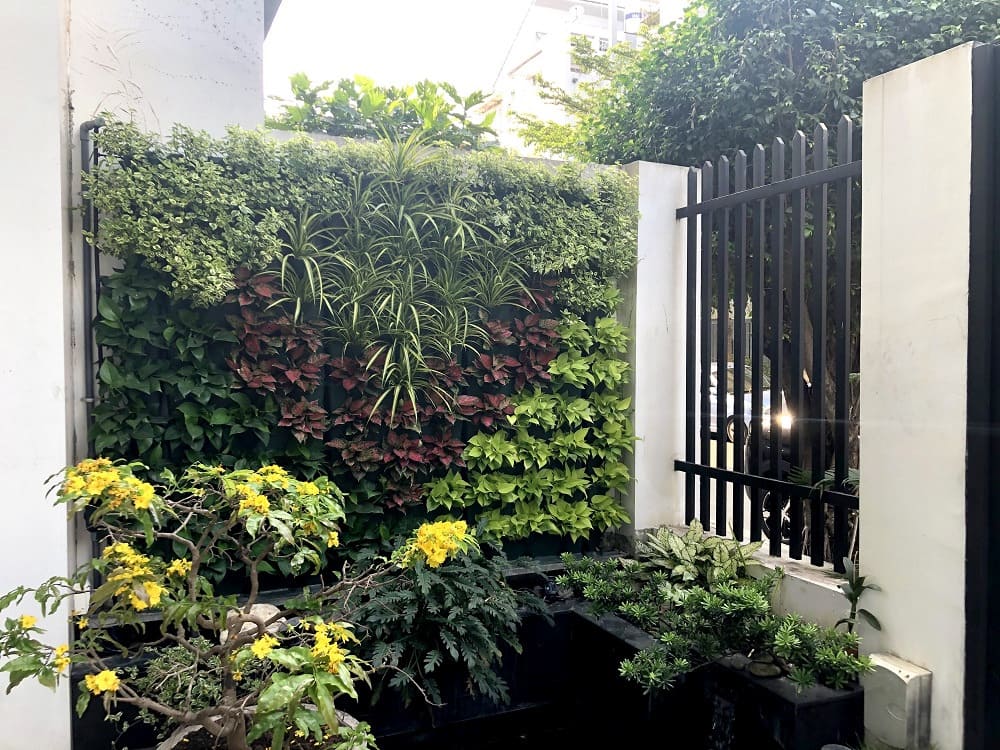
Vertical Garden
Benefits of Vertical Gardens in Living Spaces
In the wake of rapid urbanization, green spaces are shrinking, making the need to bring nature into living environments more urgent than ever. A vertical garden is not just a modern decorative solution; it delivers tangible benefits for the environment, health, and practical usage. Below are the prominent advantages that make this model increasingly popular in residential homes, offices, and commercial projects.
-
Maximizing Usable Space: One of the greatest advantages of a vertical garden is its ability to utilize wall surfaces for greenery instead of taking up floor space. This is exceptionally ideal for townhouses, apartments, offices, or areas with limited space. Consequently, property owners can increase green density while fully maintaining the functional use of the building.
-
Improving Air Quality: Plants in a vertical garden can absorb $CO_2$, filter dust, and help reduce air pollutants. At the same time, the photosynthesis process replenishes oxygen, creating a fresher and more comfortable living environment. This is a highly beneficial solution for urban areas with high construction density and scarce natural green spaces.
-
Effective Noise Reduction: Thanks to its multi-layered structure of plants, growing media, and framing systems, a vertical garden can absorb and dampen sound levels from the external environment. This helps mitigate noise from traffic or crowded residential areas, offering a quieter and more peaceful space for users.
-
Enhancing Aesthetic Value: A harmoniously designed green wall serves as a striking highlight in the overall architecture. Vertical gardens soften harsh concrete surfaces, foster a connection with nature, and elevate the aesthetic value of the space. For restaurants, coffee shops, hotels, or offices, this is also a key factor that builds brand identity and attracts customers.
-
Supporting Mental Health: Numerous studies show that exposure to greenery helps reduce stress, boost mood, and improve concentration. The presence of a vertical garden in living and working spaces induces relaxation, contributing to an enhanced quality of life and better daily work productivity.
-
Protecting Building Structures: When properly designed and installed, a vertical garden acts as a natural buffer that shields the wall surface from the direct impact of sunlight, rain, wind, and temperature fluctuations. This minimizes cracking, fading, and structural degradation over time.
-
High Design Flexibility: Vertical gardens can be tailored to various styles, from modern and minimalist to tropical or natural-ecological. The sheer variety of materials, plant species, and layout configurations allows this solution to seamlessly adapt to diverse architectural types, meeting the specific aesthetic and functional needs of each project.
Structure of a Professional Vertical Garden System
For a vertical garden to grow sustainably and maintain its aesthetic appeal over the long term, the key lies not only in plant selection but also in the technical structure of the entire system. A professional vertical garden system must be synchronously designed—from the load-bearing structure and waterproofing layer to the irrigation and drainage systems—to ensure durability, safety, and optimized operational costs.
Load-Bearing Frame
The load-bearing frame is the foundational component of the vertical garden system, responsible for supporting the entire weight of the plants, growing media, water, and accompanying technical equipment. In practical installation, stainless steel and galvanized steel are commonly used materials due to their excellent load-bearing capacity, corrosion resistance, and long lifespan in outdoor conditions. For indoor or small-scale projects, PVC frames are also selected to reduce load weight and save investment costs.
Wall Waterproofing Layer
The waterproofing layer plays a vital role in protecting the building’s structure from the risks of mold, paint peeling, or prolonged water infiltration. Typically, contractors use specialized waterproofing membranes combined with an isolation layer to create a buffer zone between the wall and the vertical garden system. This is a mandatory component for all projects to guarantee long-term durability.
Growing Media System (Substrates)
The growing medium is the environment that anchors the root system, maintains moisture, and supplies nutrients to the plants growing on a vertical surface. Commonly used substrates include coco coir, biochar (hulled rice husks), perlite, or pre-treated specialized mixtures. A standard growing medium must be lightweight, provide excellent drainage, maintain stable moisture retention, and prevent root rot.
Automatic Irrigation System
The irrigation system is a critical component that ensures plants receive adequate water and nutrients evenly. Among various methods, drip irrigation is considered the optimal solution due to its precise flow control, water efficiency, and minimal runoff. For spaces requiring increased humidity or specific landscape effects, misting systems are also a suitable choice. Modern systems are often integrated with timers, pressure regulators, and filtration units to ensure stable operation.
Drainage System
After irrigation, excess water must be effectively collected and channeled away to avoid root waterlogging or water overflowing into surrounding areas. The drainage system usually includes collection gutters, drainage pipes, and strategically placed water intake points to maintain an ideal growth environment for the plants.
Nutrient Distribution System
For large-scale vertical garden projects or those requiring intensive care, the system can be integrated with an automatic fertilizer injector (fertigation unit). This equipment helps distribute nutrients evenly to each zone, minimizes errors from manual care, and contributes to the stable growth of the greenery.
Moisture-Retaining and Technical Liner Layers
Some modern vertical garden systems utilize an additional layer of geotextile fabric or specialized felt to enhance moisture retention and anchor the roots. This component helps maintain stable humidity, prevents localized drying, and extends the lifespan of the entire system.
Smart Control and Sensor Systems
In high-end landscape projects, vertical gardens can be equipped with moisture sensors, automatic controllers, or remote management systems. These devices allow real-time monitoring of plant health, automatically adjusting water and nutrient levels accordingly, while significantly reducing maintenance and care efforts.
Overall, a professional vertical garden system is a combination of precise installation techniques and appropriate care solutions. Investing fully in these structural components from the outset not only ensures stable plant growth but also guarantees that the project operates sustainably, safely, and maintains its aesthetic value for many years
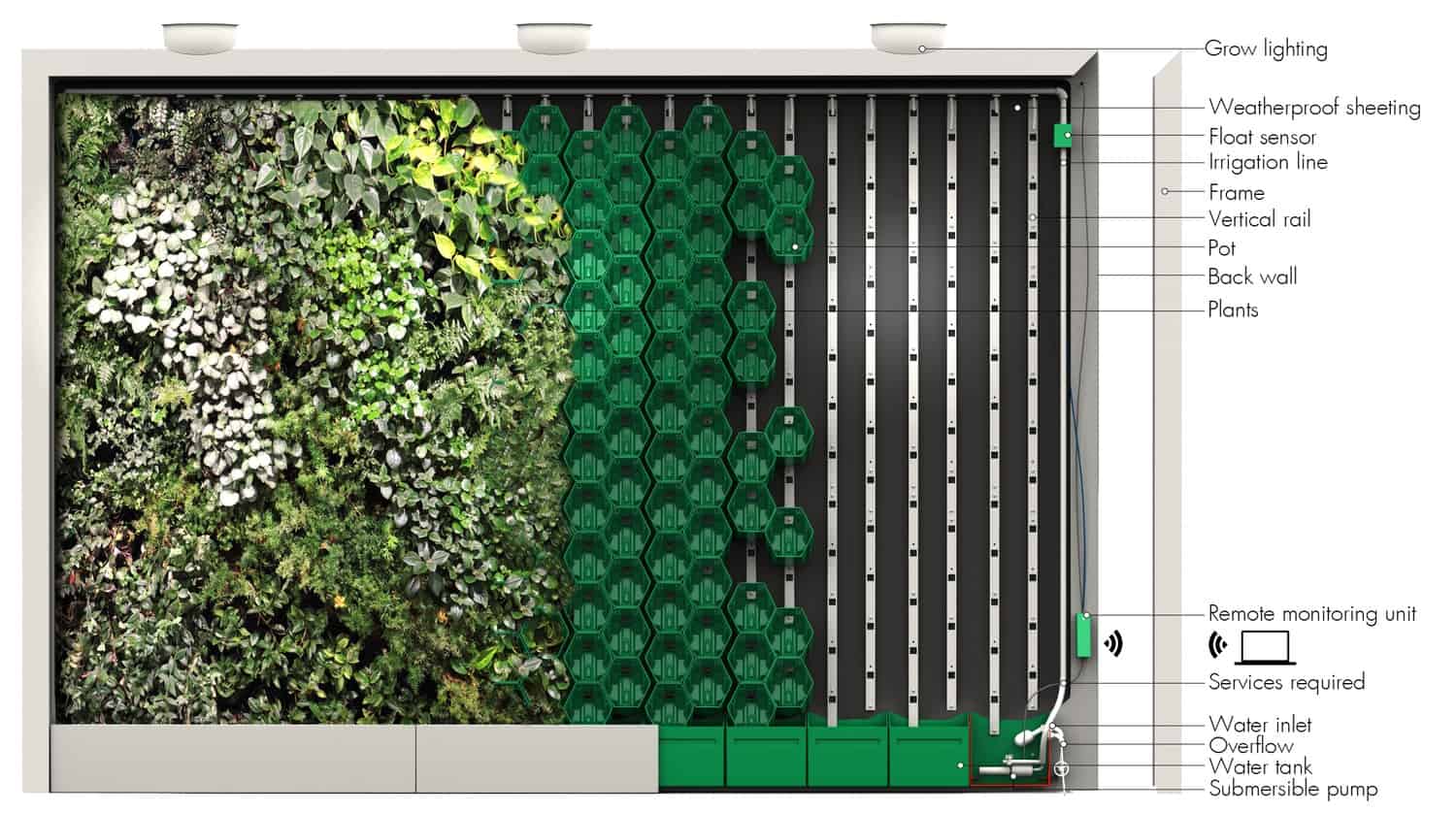
Structure of a Vertical Garden System
Beautiful and Popular Vertical Garden Models Today
In practical landscape design and installation, vertical gardens do not follow a fixed template; instead, they are flexibly tailored to the architecture, area, and intended use of each project. From residential homes and offices to large-scale commercial developments, vertical gardens can serve as striking green highlights, elevating both the aesthetic value and spatial quality. Below are the most widely applied vertical garden models today.
Large-Scale Building Facade Green Walls
This vertical garden model is commonly seen in hotels, shopping malls, corporate offices, or modern high-rises. The system utilizes a diverse array of plant species—such as ferns, shrubs, colorful foliage, and flowering plants—to create high-coverage, natural green blankets. This design delivers a striking visual effect while contributing to microclimate improvement and enhancing the building’s ecological profile.
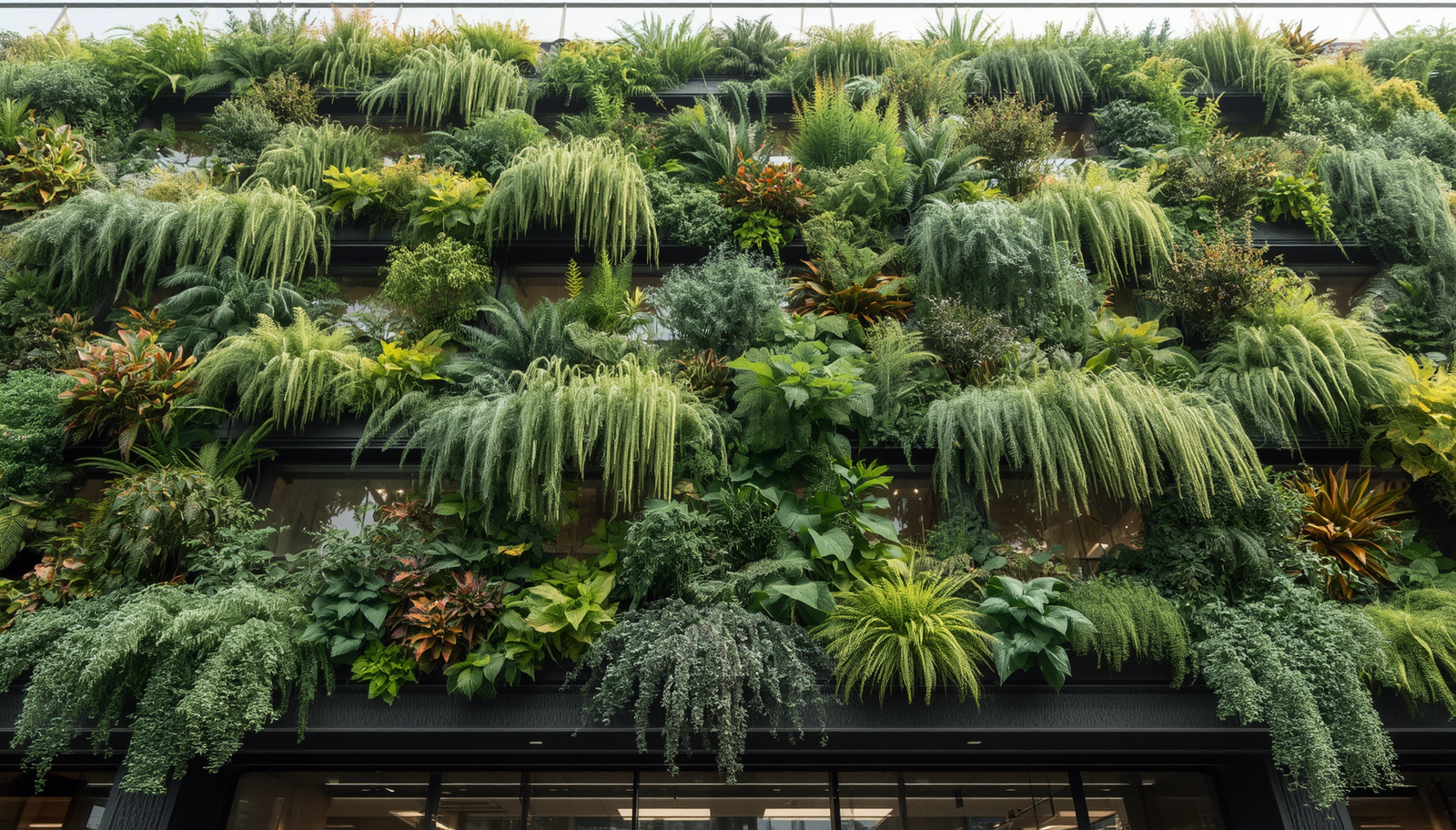
Large-Scale Building Facade Green Walls
Vertical Gardens for Backyard Landscaping and Relaxation Corners
This vertical garden model is typically arranged in backyards, relaxation areas, or indoor green spaces. Plant species like pothos, ferns, peace lilies, and colorful foliage are harmoniously combined with miniature landscapes, lounge chairs, or decorative lighting systems. The lush, cool green space induces a sense of tranquility, fosters a closeness to nature, and enhances the daily living experience.
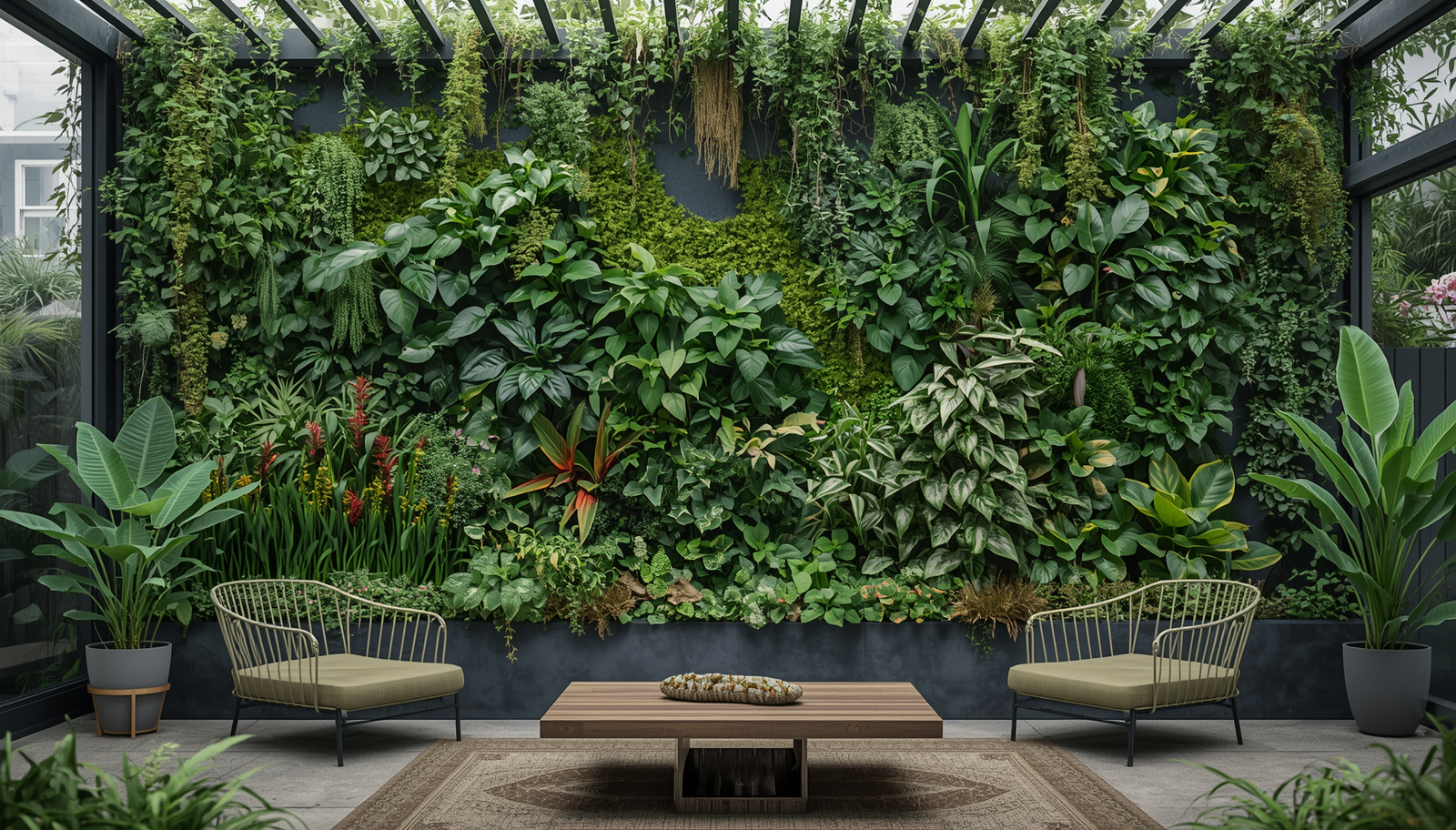
Vertical Gardens for Backyard Landscaping and Relaxation Corners
Modern Balcony and Rooftop Vertical Gardens
For homes with limited square footage, a vertical garden on the balcony or rooftop serves as the ultimate solution to maximize green areas without taking up much usable floor space. The design typically utilizes lightweight, compact modular systems combined with spider plants, small shrubs, elongated foliage, or trailing/cascading plants. The overall look offers a modern, clean aesthetic that perfectly aligns with urban green living trends.
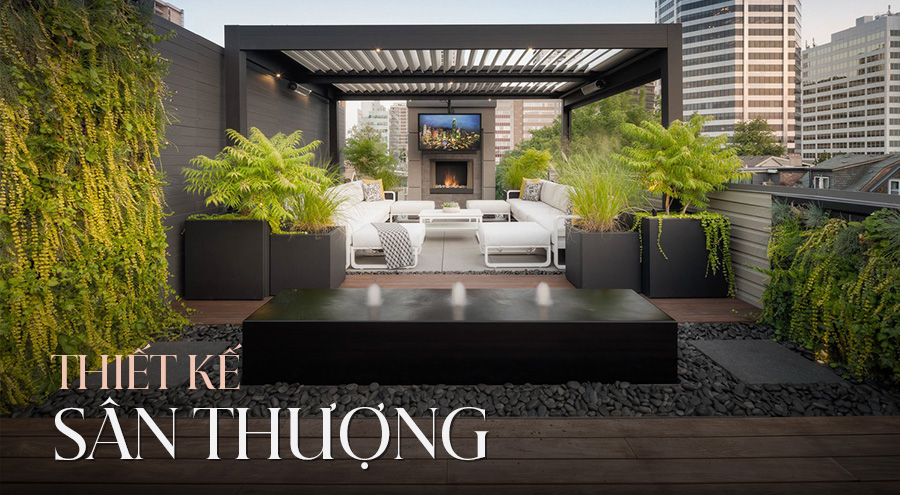
Modern Balcony and Rooftop Vertical Gardens
Townhouse Facade Vertical Gardens
A facade vertical garden is a favorite choice among homeowners due to its ability to create a striking architectural highlight. The design typically features green foliage combined with vibrant, colorful plants such as red aglaonema (Phu Quy), ti plants (Huyet Du), or golden pothos to add depth to the wall surface. Beyond its aesthetic appeal, this model effectively reduces heat and shields the building from the direct impact of sunlight.
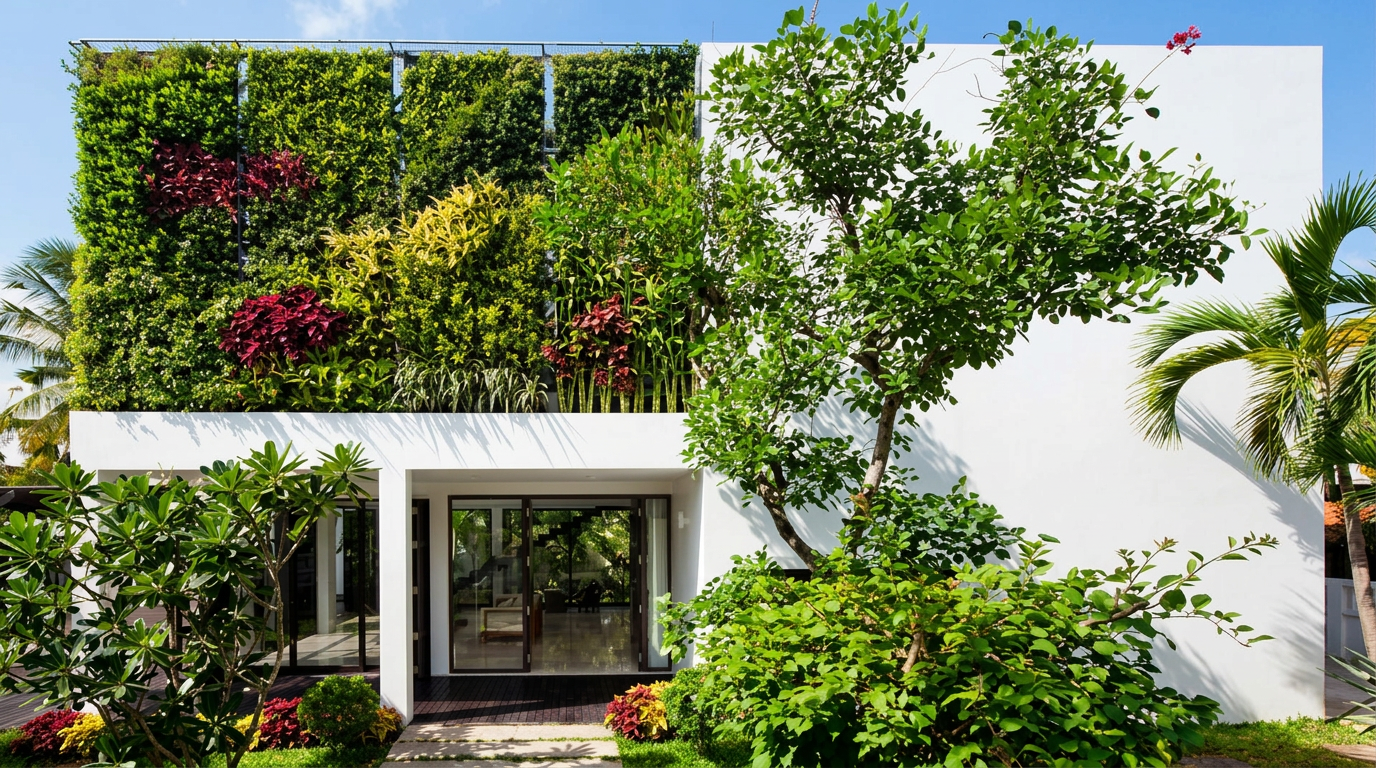
Townhouse Facade Vertical Gardens
Architectural Corner-Utilizing Vertical Gardens
Empty architectural corners are often difficult to utilize effectively in landscape design. With a vertical garden system, these areas can be transformed into unique green highlights by using planting modules combined with ferns, creeping plants, or trailing species. This solution maximizes available space while adding a soft, organic touch to the building’s architecture.
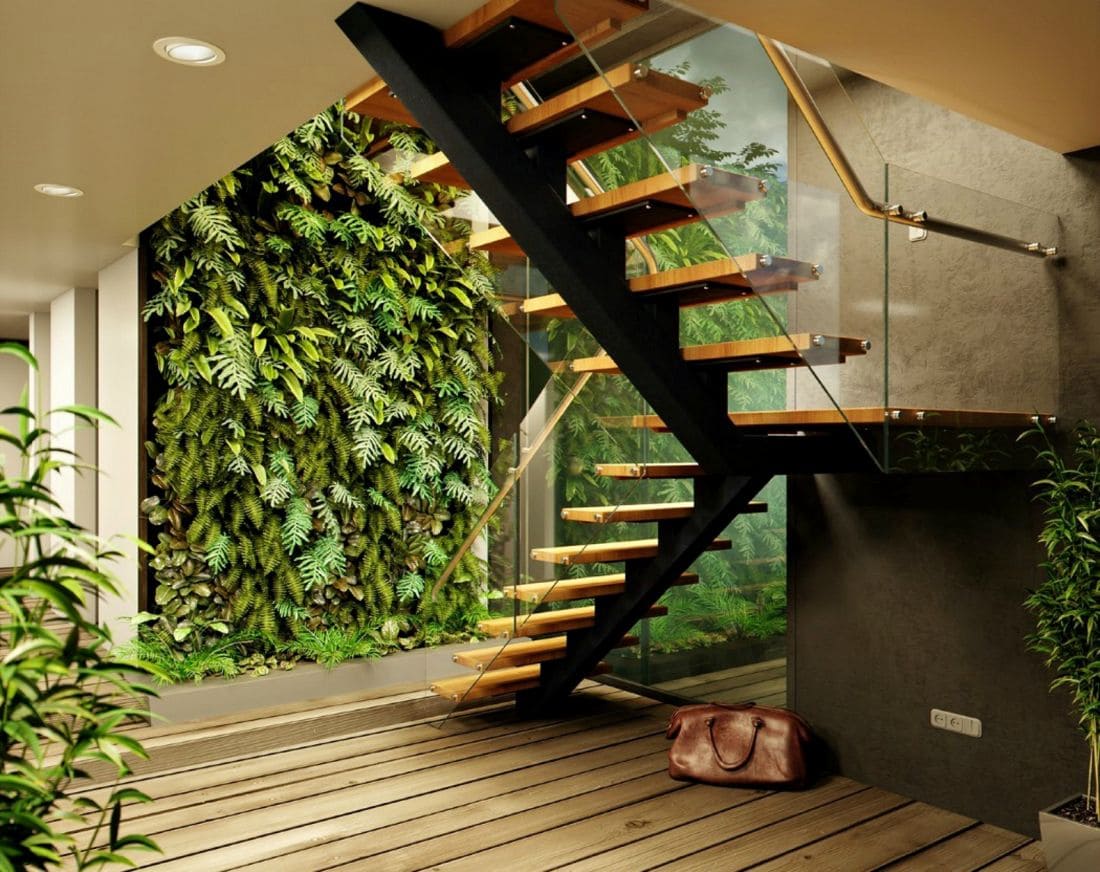
Architectural Corner-Utilizing Vertical Gardens
Commercial Property Vertical Gardens
Shopping malls, corporate offices, showrooms, and hotels often opt for large-scale vertical gardens to elevate their brand image and leave a lasting impression on customers. The design typically utilizes a synchronized modular system, arranging plants in grand, well-structured blocks to achieve a highly professional and modern aesthetic for the commercial space.
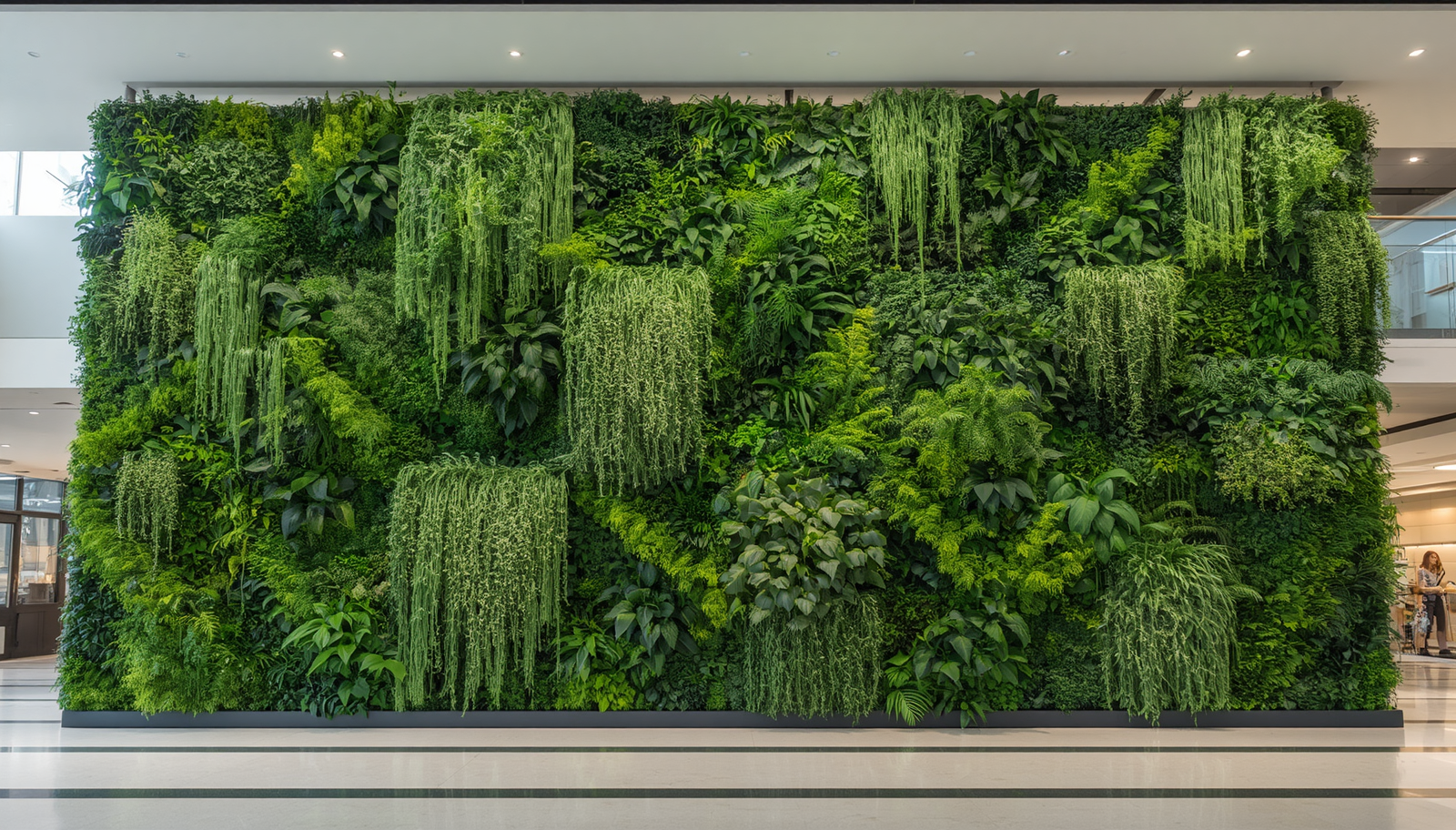
Commercial Property Vertical Gardens
Vertical Gardens Integrated with Wooden Louvers and Decorative Frames
This is a trending design choice favored in resorts, coffee shops, homestays, and residential rooftops. The greenery system is combined with wooden louvers, metal frames, or ornamental details to enhance its aesthetic appeal. Trailing plants such as pothos, ivy, or ferns help soften the overall structure, creating a natural look and inducing a deep sense of relaxation for users.
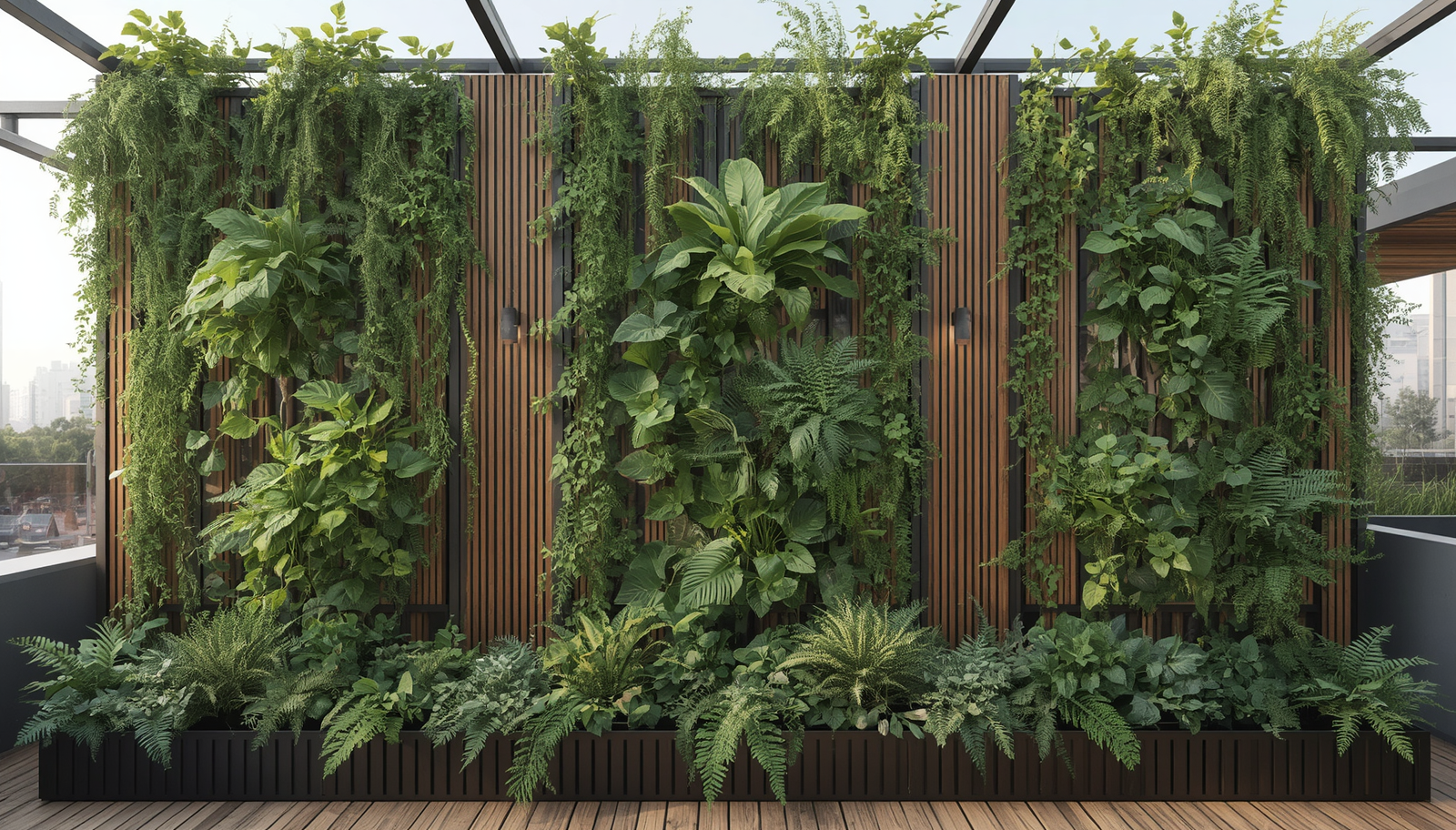
Vertical Gardens Integrated with Wooden Louvers and Decorative Frames
Mỗi mẫu vườn đứng đều có những đặc điểm riêng về công năng, thẩm mỹ và chi phí đầu tư. Việc lựa chọn mẫu thiết kế phù hợp sẽ giúp tối ưu không gian, đáp ứng nhu cầu sử dụng và tạo nên một công trình xanh bền vững, hài hòa với kiến trúc tổng thể.
Principles for Plant Selection in Vertical Gardens
When selecting plants for a vertical garden, priority should be given to species with compact root systems, lightweight profiles, high tolerance to pruning, and the ability to adapt to a vertical growing environment. Additionally, it is highly recommended to choose plants with similar care requirements to ensure seamless irrigation, fertilization, and system maintenance.
Selecting the right plant species from the initial design phase not only ensures the stable growth of the vertical garden but also contributes to maintaining the project’s aesthetic value and long-term lifespan.
Hey Garden – Professional Vertical Garden Design and Installation Service
A vertical garden is not only an optimal space-saving solution but also a key element in creating green living spaces, enhancing environmental quality, and elevating the aesthetic value of any structure. To possess a vertical garden that is both beautiful and durable—growing sustainably while seamlessly blending with the overall architecture—choosing a professional design and installation contractor is exceptionally vital.
Hey Garden proudly accompanies customers in designing and installing innovative green landscape solutions, ranging from indoor and outdoor vertical gardens to large-scale green walls. With an experienced team, a methodical installation process, and a deep understanding of landscape greenery, Hey Garden is committed to delivering high-quality, aesthetic, and long-lasting projects. Contact Hey Garden today for a consultation on the most suitable vertical garden solution for your space.
HEY GARDEN CO., LTD
Address: 48 Street No. 13, Lakeview City Residential Area, Binh Trung Ward, Ho Chi Minh City, Vietnam
Hotline: 036 503 6006
Website: Heygarden.vn
HEY GARDEN — A Part of Your Life 🌿
