
$0.00


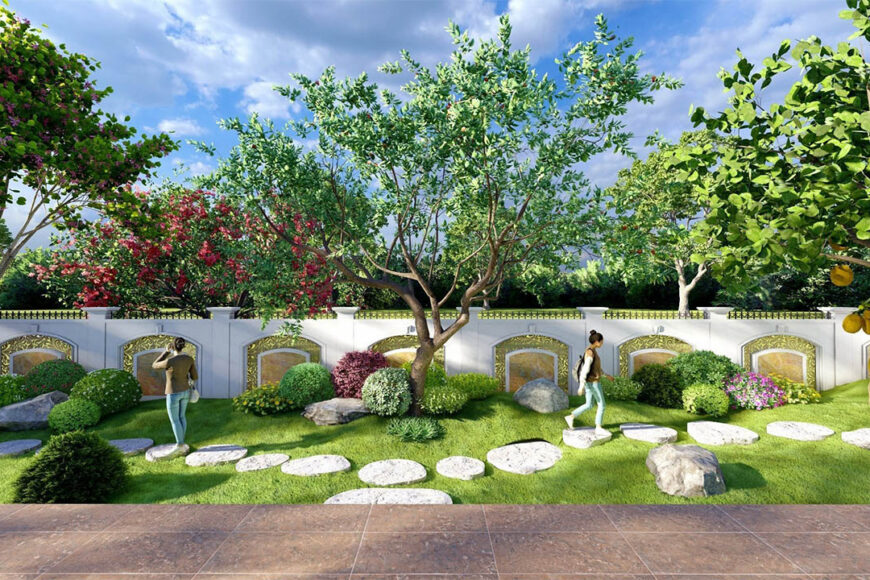
How to Create a Mini Garden Landscape for Beginners – Simple, Beautiful, and Cost-Effective
In recent years, mini garden landscapes have become a popular home decoration trend loved by many households. With just a small space such as a corner of the yard, a balcony, or a small area in front of the house, you can still create a green, relaxing, and aesthetically pleasing garden.
If you are a beginner and don’t know where to start, the guide below will walk you through simple step-by-step instructions on how to create a beautiful mini garden landscape, making it easy for you to design your own space at home.
1. What Is a Mini Garden Landscape?
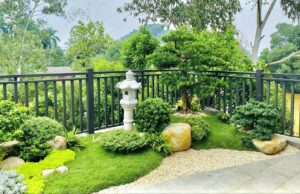
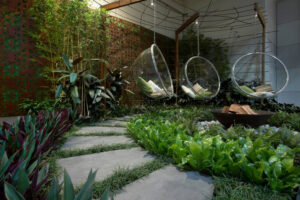
A mini garden landscape is a small-scale garden designed within a limited space while still recreating the natural beauty of greenery, rocks, pebbles, and sometimes a small pond or miniature waterfall. The harmonious combination of these elements creates a refreshing green corner that brings a relaxing and comfortable feeling to the living space.
Not only does it enhance the aesthetic value and make the home more lively, but a mini garden landscape also carries feng shui significance, helping to increase positive energy and vitality for the homeowner. With its compact and flexible design, this type of landscape is especially suitable for townhouses with limited space, apartment balconies, garden cafés, or offices that want to add more greenery.
2. Benefits of Creating a Mini Garden Landscape
Creates a relaxing space
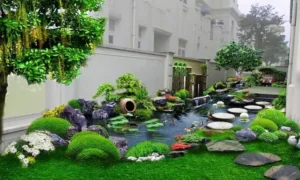
After a stressful working day, sitting in a small garden with greenery and the sound of flowing water helps reduce stress effectively and brings a sense of peace.
Enhances home aesthetics
A corner of the yard with a mini landscape makes the overall house look more elegant, lively, and visually appealing compared to an empty space.
Improves feng shui
In feng shui, water and greenery symbolize wealth and life energy, helping attract good fortune and positive energy for the homeowner.
Improves air quality
Plants help reduce heat, filter dust, and create a fresher and healthier living environment.
3. Preparation Before Creating a Mini Garden Landscape
Before starting to design a mini garden landscape, you need to prepare several basic elements to ensure a smooth construction process and achieve a high level of aesthetics for the final result.
First, it is important to choose a suitable location for the landscape. Commonly selected areas include the front yard corner, side of the house, balcony, skylight area, or rooftop corner. These spaces are ideal for creating green focal points and making good use of unused areas. When selecting a location, it is best to choose a place with moderate natural light—neither too dark nor exposed to harsh sunlight—to ensure healthy plant growth.
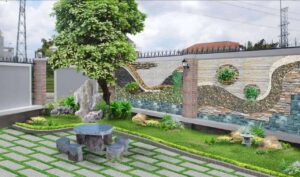
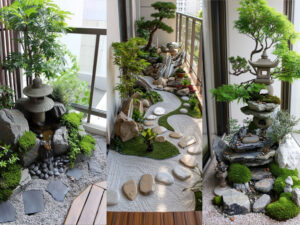
Next, you should select a suitable design style that matches the overall architecture of your home. Popular styles today include the Japanese style, featuring white pebbles, large stones, bonsai trees, and mini koi ponds for a peaceful and serene atmosphere; tropical style, with lush greenery, natural stones, and small waterfalls for a close-to-nature feel; or modern minimalist style, which focuses on simplicity with neatly arranged stones and greenery for an elegant and refined look.
In addition, preparing materials is also very important for a smooth construction process. Common materials include decorative stones such as tiger skin stone, river stones, or pebbles; white or colored gravel for accents; small ornamental plants; planting pots or garden beds; decorative statues; and outdoor lighting to enhance aesthetics. If the landscape includes a waterfall or small water feature, a mini water pump is also needed to create a natural flowing effect, making the design more lively and attractive.
4. Step-by-Step Guide to Creating a Mini Garden Landscape
Step 1: Develop the design concept
Before starting construction, you should sketch a basic layout of the entire landscape to visualize the space more clearly. Define the placement of key elements such as large plants, stone arrangements, gravel pathways, and the location of a mini pond or waterfall if included. Planning ahead helps ensure a balanced layout, avoids clutter, and creates a harmonious overall design.
Step 2: Prepare the ground surface
After finalizing the layout, the next step is to prepare the soil base. First, remove all weeds, debris, and obstacles from the construction area, then level the ground to create a stable foundation. Next, lay a weed-control mesh to prevent unwanted plant growth, followed by a layer of sand or gravel to improve drainage. This step is essential for long-term durability and easier maintenance of the landscape.
Step 3: Arrange decorative stones
Stones are an important element in creating a natural scenery for the garden. When arranging them, place the larger stones first to establish the main focal points, then add smaller stones around them to create a more natural look. The arrangement should resemble natural rock formations, avoiding overly symmetrical layouts that may look artificial. For a mini rock garden, you can use tiger skin stone or coral stone to achieve a more dynamic and realistic appearance.
Step 4: Plant greenery
After completing the stone and base structure, the next step is to add plants to bring life to the landscape. Common plants used in mini gardens include ferns, dracaena, peace lily, spider plant, miniature bonsai, and pine trees. When planting, combine different layers such as tall plants, medium plants, and ground-cover plants to create depth and a natural garden effect.
Step 5: Add gravel and decorative accessories
The final step is to complete the landscape with decorative details. White or colored gravel can be spread around plant bases and pathways to enhance visual appeal. In addition, you can add decorative statues, garden lights, or a small stone bench to create focal points. These finishing touches help the mini garden look more lively, balanced, and relaxing for the living space.
5. Important Notes When Creating a Mini Garden Landscape
6. How Much Does a Mini Garden Landscape Cost?
The cost of building a mini garden landscape can vary depending on several factors such as the installation area, the type of decorative stones used, the types of plants selected, and whether the design includes a water feature or mini waterfall. In addition, the level of design complexity also has a significant impact on the overall cost.
Typically, for a simple mini landscape using only plants, stones, and decorative gravel, the cost ranges from around 1 to 3 million VND. If the design includes a small waterfall or pond, the cost usually increases to about 3 to 7 million VND due to additional requirements such as a water pump and extra materials. For professionally designed and constructed landscapes with more complex layouts and high-end materials, the cost can range from 7 to 20 million VND or even higher, depending on the size and specific requirements of the homeowner.
However, if you design and build the mini landscape yourself, you can significantly reduce costs while still creating a beautiful and relaxing green space for your home.
7. Why Should You Hire a Professional Unit to Design a Landscape?
Many people choose to build mini garden landscapes by themselves to save costs. However, after a period of use, common issues often appear such as an unbalanced layout, unsuitable plants that easily wither, cloudy pond water, or poor drainage systems that lead to waterlogging. These problems usually come from a lack of experience in landscape design and construction.
Therefore, choosing a professional landscape design company will help you achieve a beautiful, durable, and well-suited mini garden for your living space. Professional units have experience in optimizing space, arranging plants, stones, and water features in a harmonious way to create high aesthetic value. In addition, they can recommend suitable plant types based on lighting conditions, design proper drainage systems, and ensure feng shui elements for the home. As a result, you not only save time but also avoid future repair or renovation costs for your landscape.
HEY GARDEN CO., LTD
Address: 48 Street No. 13, Lakeview City Residential Area, Binh Trung, Ho Chi Minh City, Vietnam
Hotline: 0916 909 535
Website: Heygarden.vn

HEY GARDEN — A Part of Your Life 🌿
