
$0.00


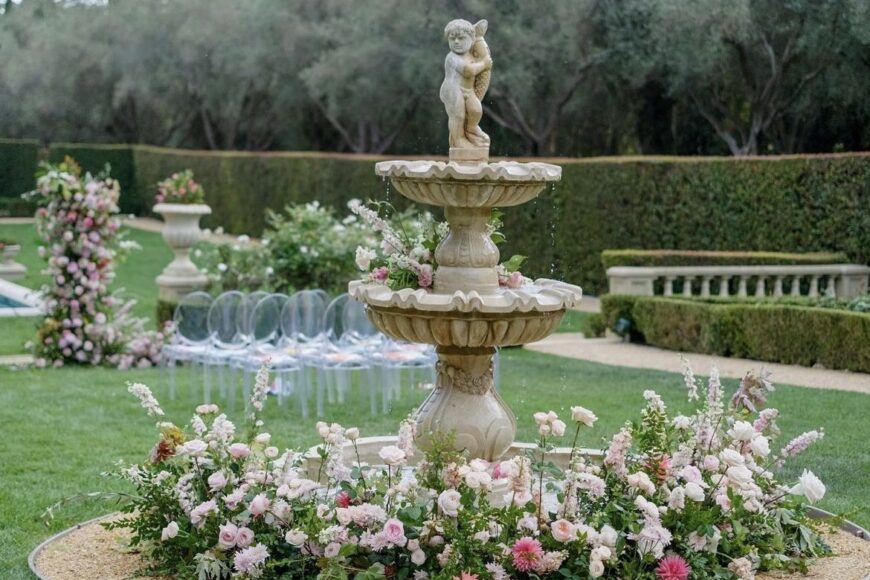
In modern landscape design, water fountains serve not only as decorative features but also contribute significantly to boosting aesthetic value, microclimate regulation, and evoking a sense of relaxation within living spaces. From villa gardens, cafes, and luxury resorts to public plazas, a water fountain consistently acts as a captivating focal point that elevates the overall architecture.
However, to possess a structure that is both visually stunning and operating reliably over the long term, the design process must adhere to several critical engineering principles. Precise calculations regarding structural integrity, water supply and drainage systems, pump pressure, electrical safety, and material selection all directly impact the fountain’s operational efficiency and lifespan.
In the article below, let’s explore the engineering-standard principles of landscape fountain design to craft a space that is both aesthetically impressive and firmly guaranteed in terms of structural sustainability and operational safety.
The Benefits of Water Fountains in Garden Landscapes
In landscape design, a water fountain does not merely enhance visual appeal; it also delivers immense functional, emotional, and Feng Shui value to the garden. This feature is widely recognized as a premium addition that elevates aesthetics and creates a striking centerpiece for modern living spaces.
Enhancing Spatial Aesthetics
Water fountains establish a compelling visual focal point, adding dynamic vitality and depth to the garden. The artistic fusion of moving water, lighting, and premium materials—such as natural stone, concrete, ceramics, or metal—infuses a sense of luxury and sophistication into the entire landscape.
Serving as a Central Focal Point in Garden Layouts
A water fountain can act as the primary anchor point, seamlessly connecting various zones such as pathways, lawns, miniature landscapes, and outdoor seating areas. When thoughtfully positioned, this feature provides the garden with a clear, well-balanced, and highly professional structural layout.
Regulating the Microclimate and Evoking Coolness
The kinetic motion of water naturally boosts ambient humidity and cools the surrounding air, making it exceptionally beneficial for sun-drenched gardens. Consequently, the outdoor environment becomes substantially more comfortable, creating a refreshing atmosphere for relaxation or hosting guests.
Generating Relaxing Sounds to Reduce Stress
The gentle, rhythmic sound of cascading water softens the hard edges of an outdoor space and acts as a natural buffer against external noise pollution. When engineered with the ideal water flow rate, the fountain delivers a soothing acoustic backdrop that aids mental unwinding after stressful hours.
Augmenting the Garden’s Feng Shui Value
According to Feng Shui principles, water symbolizes wealth, smooth circulation, and positive energy flows. A strategically placed, properly oriented fountain with a pristine, well-maintained water supply balances vital life force (Qi), fostering harmony and attracting prosperity to the property.
Elevating the Property’s Overall Market Value
A meticulously designed garden water feature showcases the homeowner’s refined aesthetic taste and investment standard. Furthermore, it serves as a high-end asset that significantly boosts the market appeal and premium prestige of villas, country estates, hotels, and luxury resorts.
Enhancing the Outdoor Living Experience
A fountain transforms a garden from a static visual display into an interactive sanctuary for relaxation, casual conversation, tea tasting, or entertaining. When paired with lush greenery, outdoor benches, and ambient lighting, this zone quickly evolves into an ideal outdoor living room for the entire family.
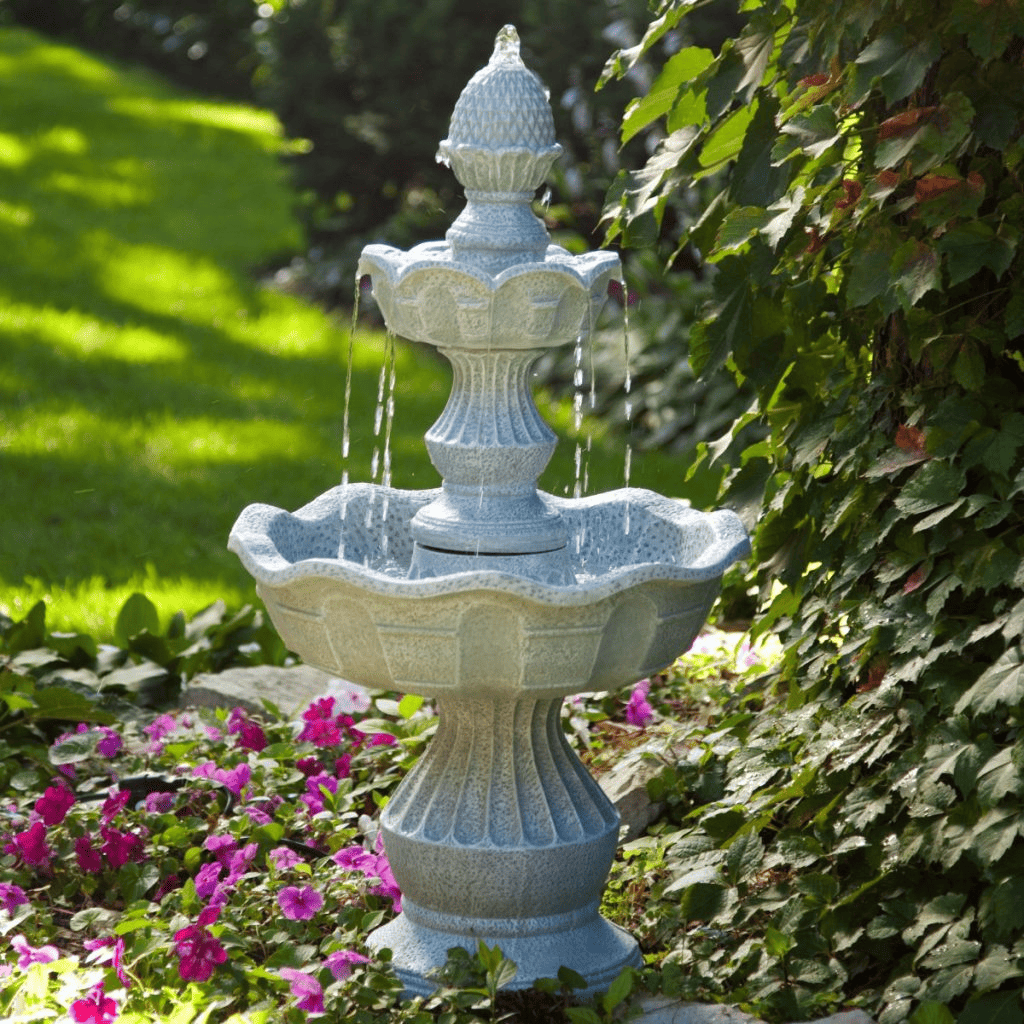
The Benefits of Water Fountains in Garden Landscapes
Engineering-Standard Principles for Landscape Fountain Design
To ensure a structure operates reliably, endures over time, and achieves high aesthetic value, strict compliance with engineering principles is paramount during the landscape fountain design process. Moving far beyond mere visual appeal, the entire system must be meticulously calculated from the outset to mitigate future repair costs and guarantee absolute safety during long-term operation.
Selecting a Strategic Installation Site
The installation location must ensure high visibility and serve as a focal point without obstructing pathways or daily outdoor activities. Additionally, the designated area should offer convenient access to electrical utilities, water supplies, and routine servicing to ensure the system operates smoothly.
Designing an Efficient Water Supply and Drainage System
Water supply and drainage hydraulics must be seamlessly integrated, properly sealed, and optimized to prevent leaks. The drainage component must handle runoff effectively to eliminate basin overflowing, water stagnation, or unhygienic conditions in the surrounding garden area.
Calculating Precise Water Pressure and Flow Rates
Each nozzle type requires a specific hydraulic pressure and flow rate to generate its engineered water spray effect. Inaccurate calculations can lead to weak water jets, misdirected sprays, or a complete failure to achieve the desired aesthetic impact intended in the master plan.
Utilizing Durable and Premium Waterproofing Materials
Materials in direct contact with water must possess exceptional waterproofing, anti-corrosion, and weather-resistant properties. Natural stone, waterproof concrete, mosaic tiles, and stainless steel (inox) are preferred choices to maximize structural lifespan and sustain the pristine beauty of the water feature.
Guaranteeing Operational and Electrical Safety Standards
The electrical system must be installed in strict accordance with engineering regulations, utilizing waterproof components and automatic ground-fault circuit interrupters (GFCI) in case of an emergency. This is a critically vital factor to ensure user safety and maintain the long-term reliability of the fountain system.
Optimizing Maintenance and Cleaning Accessibility
The structural design must accommodate unhindered access to mechanical hardware, such as submersible pumps, filtration systems, and technical piping. This ensures that routine maintenance, deep cleaning, and equipment replacement are executed swiftly and cost-effectively, keeping the water crystal clear while preventing algae growth or debris accumulation.
Integrating Flawlessly with the Master Landscape Plan
A fundamental rule in landscape fountain design is ensuring absolute harmony with the surrounding architecture and environment. Dimensions, geometric shapes, material textures, and design styles must be carefully proportioned so that the structure acts as a refined accent rather than a detached or poorly scaled anomaly in the garden layout.
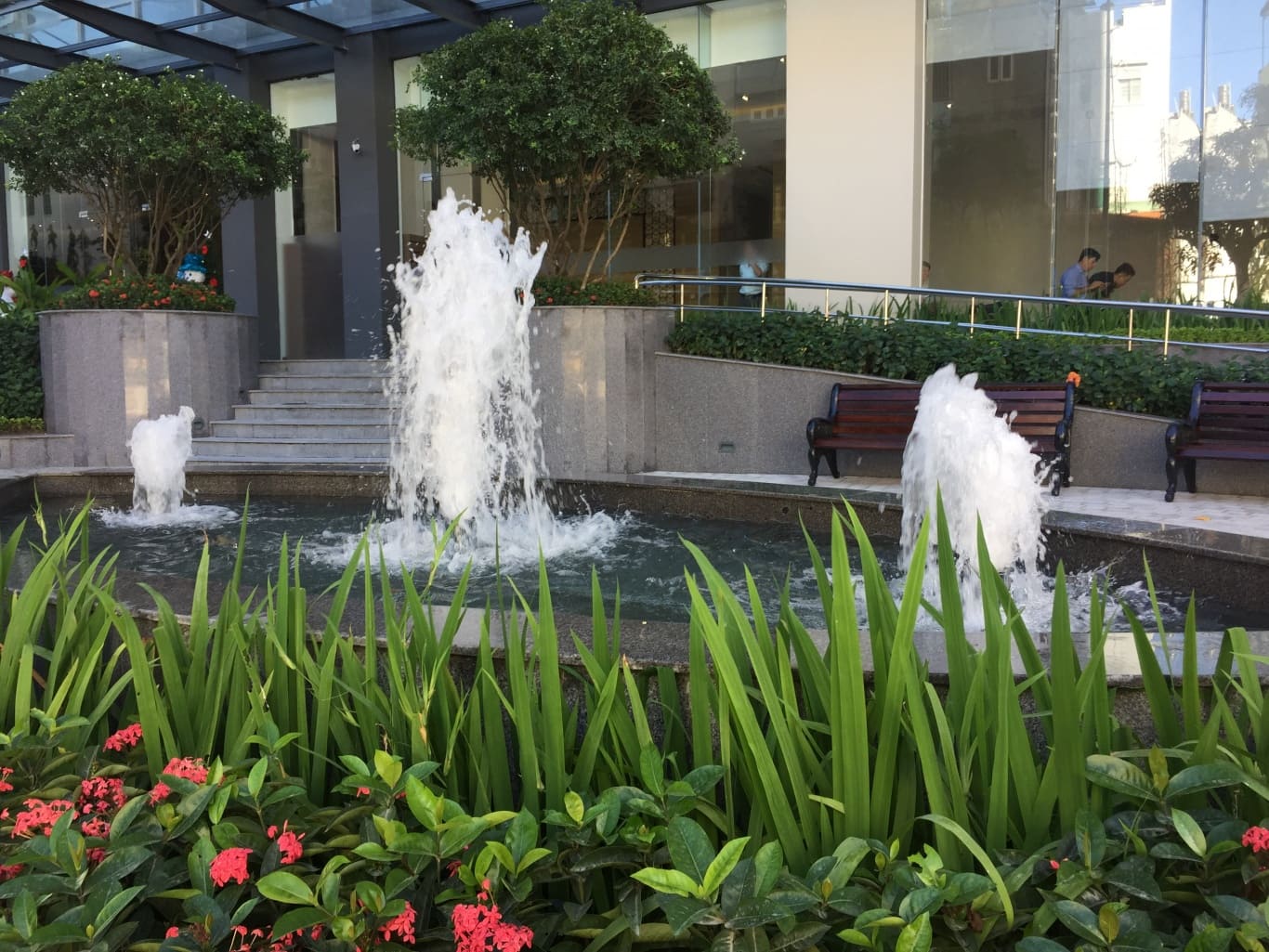
Engineering-Standard Principles for Landscape Fountain Design
Feng Shui Elements in Landscape Fountain Design
In Asian garden design, a water fountain is far more than an aesthetic landscape asset; it carries profound Feng Shui significations tied to wealth, vital life force (Qi), and the circulation of positive energy. Consequently, when planning a landscape fountain, meticulous consideration must be given to its positioning, water flow direction, geometry, and operational dynamics to ensure the structure simultaneously fulfills aesthetic goals and harmonizes with the entire environment.
Fountain Positioning According to the Five Elements
Water belongs to the Water element (Thuy), making it inherently ideal for zones that require the activation of smooth energy circulation and the softening of architectural lines. Fountains should be situated in open, pristine, and visually appealing areas that do not obstruct pedestrian pathways.
For residential villas or estates, optimal locations typically include the front yard, the side gardens, or a central miniature landscape zone. Designing fountains in dark, damp, or poorly ventilated spaces should be strictly avoided, as it detrimentally impacts both aesthetic quality and overall spatial Feng Shui.
Water Flow Direction and Wealth Connotation
In Feng Shui lore, flowing water represents financial energy and prosperity. When engineering the feature, the water flow should be directed inward toward the property or converge at the center, symbolizing the attraction and retention of wealth.
Conversely, water jets should never aggressively spray directly toward the main gate or drain too quickly away from the property, as this is structurally interpreted as a dissipation of vital energy and financial fortune.
Proportional Size and Scale in Spatial Harmony
The dimensions of a water fountain must maintain a harmonious ratio with the garden’s total area and the overall architectural scale. In compact spaces, priority should be given to streamlined, moderately low-profile fountain models with gentle water effects to foster a tranquil environment.
For expansive estates or holiday resorts, grander scales—such as multi-tiered setups integrated with dramatic architectural lighting—can be deployed to amplify landscape presence. Achieving this spatial balance ensures the water feature acts as a complementary asset rather than overpowering the primary architecture.
Fountain Shapes in Accordance with Feng Shui
Geometric layouts featuring organic, fluid curves, circles, or ovals are highly favored in Feng Shui practices, as they symbolize fulfillment and wholeness while encouraging an optimal, unobstructed flow of cosmic energy (Qi) through the space.
Meanwhile, designs plagued with sharp angles, harsh edges, or rigid blocks must be cleverly softened. Integrating lush plant material, decorative rockwork, or strategically placed lighting can reduce structural stiffness, restoring perfect equilibrium to the landscape master plan.
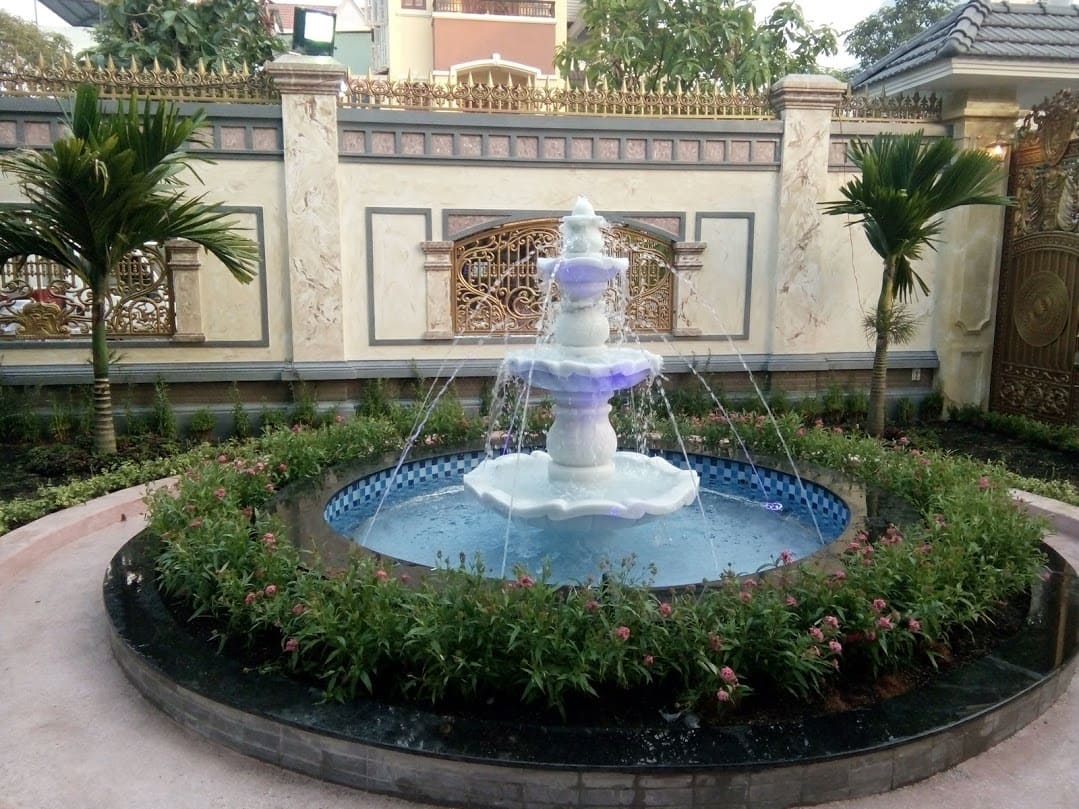
Feng Shui Elements in Landscape Fountain Design
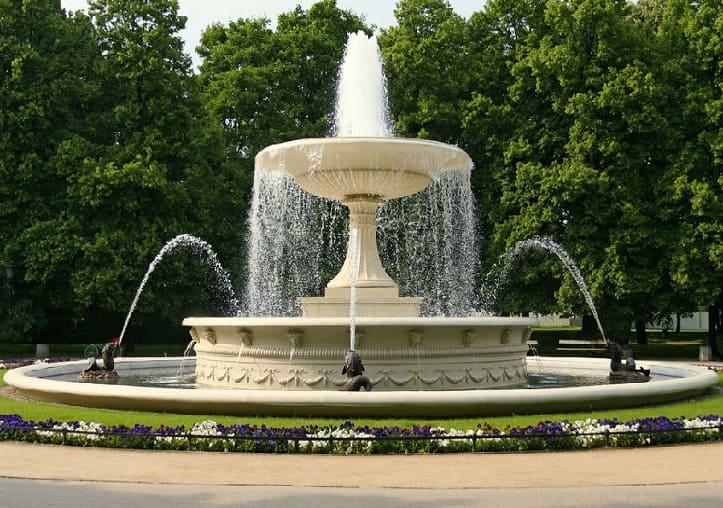
Crucial Considerations in Landscape Fountain Design
To ensure a water fountain operates efficiently, endures beautifully, and sustains its aesthetic value over time, the design and construction process must pay special attention to various technical elements as well as its harmony with the broader landscape.
Selecting an Optimal Location
Water fountains should be positioned in central areas or highly visible locations to establish a striking centerpiece for the entire garden space. Concurrently, the installation site must guarantee convenient access to electrical utilities, water supplies, and routine maintenance throughout its operational lifespan.
Ensuring the Stability of Technical Systems
Submersible pumps, water filtration systems, and supply-drainage hydraulics must be meticulously calculated to guarantee continuous, stable, and energy-efficient operation. Engineering the systems correctly also heavily mitigates the risks of leaks, clogging, or mechanical breakdowns during long-term use.
Choosing Durable Outdoor Materials
Materials specified for the fountain must possess superior waterproofing, load-bearing capacity, and high resistance to harsh outdoor weather conditions. Natural stone, granite, waterproof concrete, and stainless steel are preferred choices that help the structure maintain its pristine beauty and prevent degradation over time.
Integrating Architectural Landscape Lighting
Submersible LED lighting networks or artistic illumination systems allow the water fountain to stand out spectacularly at night. A thoughtfully planned lighting layout not only amplifies the aesthetic effects but also contributes to crafting a dynamic, luxurious, and deeply relaxing garden ambiance.
Crucial Considerations in Landscape Fountain Design
Hey Garden – A Professional Landscape Fountain Design and Construction Firm
With extensive expertise in the field of landscape design and construction, Hey Garden is dedicated to crafting water fountains that seamlessly harmonize aesthetics, engineering standards, and long-term functional value. Each design goes beyond enhancing living spaces; it evokes profound relaxation, bridges the connection with nature, and establishes a striking centerpiece for the entire landscape master plan.
Hey Garden meticulously oversees every stage of development, from initial site condition surveys and design conceptualization to final construction handover. This meticulous approach ensures that each project aligns flawlessly with the architectural style, functional requirements, and budget of our clients. Our team consistently prioritizes optimized solutions regarding functionality, hydraulic systems, and premium materials to guarantee that every fountain operates reliably and endures beautifully over time.
If you are seeking a stunning, professional, and custom-tailored landscape fountain design solution for your property, Hey Garden is ready to partner with you. Let us co-create an extraordinary garden space that is inspiring, relaxing, and uniquely yours.
HEY GARDEN CO., LTD
Address: 48 Street No. 13, Lakeview City Residential Area, Binh Trung Ward, Ho Chi Minh City, Vietnam
Hotline: 036 503 6006
Website: Heygarden.vn
HEY GARDEN — A Part of Your Life 🌿
